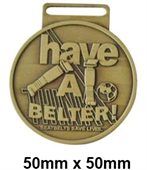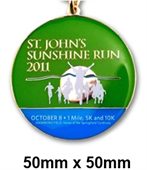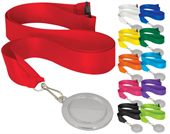

Search Results
Die Struck Brass Medallions
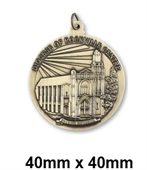
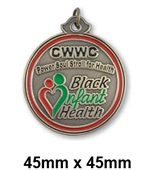
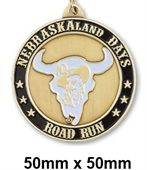
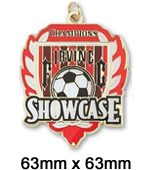
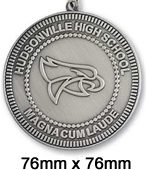
Sports and event use covers schools, clubs, fun runs, and athletic carnivals where medals go to participants and place-getters. Corporate and organisational recognition covers employee achievement awards, long-service recognition, and commemorative pieces where the brass base and die struck relief communicate the standing of the occasion. Both contexts benefit from the same process. Die striking presses the design into brass, raising the relief elements and recessing the background areas, a plating or antique finish covers the surface, and each medallion comes with a loop and jump ring ready to hang from a ribbon or lanyard. The standard specification is a 2D design on one side; double-sided and 3D designs are available for applications where a more involved specification suits the purpose.
A 50mm brass medallion with gold plating on a ribbon is a clear step above a standard die cast medal at a school's annual sports presentation. At a company's end-of-year recognition event, a 63mm medallion with an antique brass finish and a 3D crest sits in a different tier. The weight, material, and finish contribute to how the award is received.
The 3D design option produces sculptural depth across the face, with elements sitting at different heights in the relief. It suits detailed crests, figurative motifs, and commemorative designs where the dimensionality of the struck surface gives the piece its character.
Worth Knowing
What sizes are available for die struck brass medallions?
Five sizes are available from 40mm to 76mm. The 40mm and 45mm sizes suit compact recognition medallions, 50mm is the most widely ordered for school and sports events, and the 63mm and 76mm sizes suit corporate awards and ceremonial presentations where a larger, heavier piece communicates the significance of the occasion.
What is included with each medallion as standard?
Each medallion includes a loop and jump ring as standard, making it ready to hang from a ribbon or lanyard without additional hardware. The standard design specification is a 2D design on one side, with double-sided and 3D designs available as upgrades.
Why choose brass over other base materials?
Brass holds die struck detail well and produces a surface quality that other metals at the same price point do not match. The density of brass gives a medallion a substantiality when worn or held that lighter alloy options do not deliver.
Can antique and plating finishes be applied to the same medallion?
Each medallion takes one finish, either plating or antique, not both simultaneously. Plating produces a consistent metallic tone across the full surface, while antique finishing creates a two-tone contrast between the darker recessed areas and the lighter raised areas.