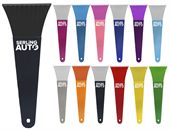
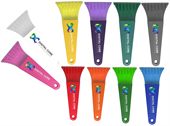
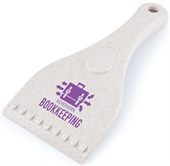
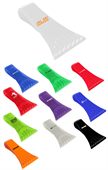
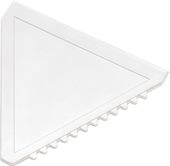
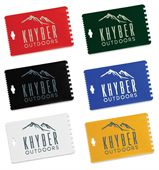
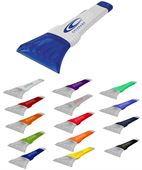
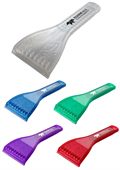
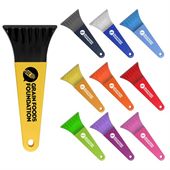
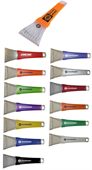
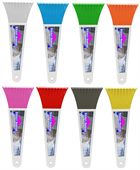
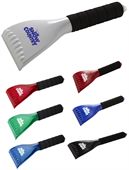
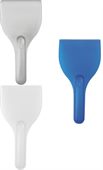
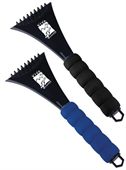
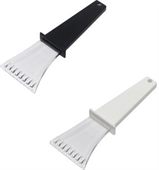
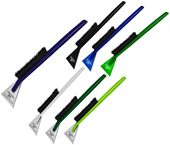
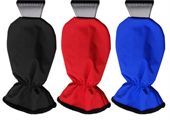
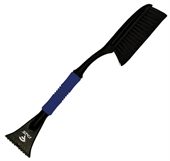
Ice scrapers in this range are defined by variations in blade design, added features and overall structure rather than a single format. The category includes flat edge scrapers for general use, serrated edge designs for breaking heavier ice, and wider blades that increase coverage across windscreens. Combination models pair a scraper with a brush, allowing snow to be cleared before the blade is applied. Differences in handle length and grip also influence how the tool is used across larger or more confined areas.
When frost or ice builds on vehicle glass, the scraper is used to break the surface layer and restore visibility. Wider blades reduce clearing time across large sections, while shaped or serrated edges assist with thicker or uneven ice. Combination tools improve efficiency by removing snow first, preventing it from interfering with the scraping edge. The selection depends on the conditions and the type of ice present.
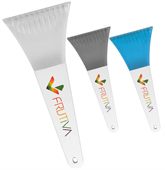
Printing and full colour digital print are applied to the handle or body of the scraper, with placement selected to maintain visibility during use.
Common Questions
What is the difference between flat and serrated ice scrapers? Flat scrapers are used for general ice removal, while serrated edges help break thicker or more compact ice before scraping. The two designs serve different conditions. The choice depends on ice build-up.
Why choose a scraper with a brush? A brush allows loose snow to be removed before the scraper is used. This improves contact between the blade and the ice. It makes the clearing process more efficient.
How does handle length affect use? Longer handles provide more reach across windscreens and larger vehicles. Shorter handles offer more control in smaller areas. The design affects how the tool is handled.
Where is branding applied? Branding is printed on the handle or body where there is sufficient flat space. The design is positioned to remain visible during use. Full colour digital print supports detailed artwork.
Are different scraper types used in different conditions? Yes, wider blades suit light frost across large areas, while serrated edges are used for thicker ice. Combination tools are useful where both snow and ice are present. The conditions determine the choice.